





NANO HRS
Meeting the regulations you are held to, and being able to show it

Aligning Your Business with Healthcare Regulations
As regulatory forces upsurge and healthcare compliance matters grow more intricate, it's crucial to sustain practical risk governance techniques. Nevertheless, this can be questioned when healthcare systems are converging, reimbursements are shrinking, patient volume is growing, and the danger of fines and lawsuits persists to grow.
Healthcare compliance has never been more critical or complicated, adding concerns about patient privacy, data security, conflicts of interest, and other regulations.
Delivering the healthcare compliance management
To encounter these challenges, intelligent healthcare compliance programs must be enforced. From implementing an automated policy administration system that enables you to define and disseminate policies and processes that fulfill HIPAA and regulatory standards to furnishing targeted activity, forming a complete risk-based compliance solution can sustain you in meeting severe regulatory anticipations.
Explore our Resolutions
Enterprise Risk Governance
It's time for a risk management solution platform that matures alongside your business.
Regulatory Management
Stay up-to-date and compliant with appropriate guidelines, ordinances, or regulations so that you can shield your assets and sidestep infringements, legal retributions, and penalties.
Issues Management
Foresee coordinating issues management and tracking for all risk remediation strategies across the enterprise in one location.
Compliance Management
Automate complicated compliance processes and guarantee they're followed every time.
Policy Management
Drive necessary content and collaborate according to precise procedures.
Incident Management
Monitor, recognize, and manage incidents to resolution across your enterprise.
Internal Audit Consulting
Ensure you identify problems and correct compliance lapses before they are uncovered in an external audit.

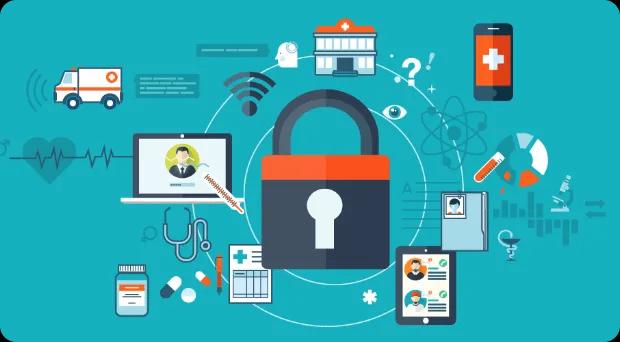
Embark all of your troubles with healthcare risk compliance that bends to your business needs.
It's a moment to drive your technology investments to perform for you to automate your risk management operations to save time, improve communication across your association, and boost your business.

Join us in the journey of building health care pathways
Connect with our specialists to upgrade your data interoperability and care alliance solutions.
Related products
Products in the suite that work alongside this one.
More about this product
Standards and code sets
- HIPAA
- DHA
- MOH
- HAAD
- DHCC
How this works with the rest of the suite
- NANO RegSol
This is the system; regulatory solutions is the advisory service that works on your obligations directly.
- NANO MAS
Internal audit is only as good as what it can read — a whole-population claims audit is where coding and billing exposure actually shows up.
- NANO AI CDI 360
Documentation is where most coding-compliance findings originate, and closing them there is cheaper than defending them later.
- NANO FWA
Compliance exposure and fraud exposure overlap, and both are visible in the same claim data.
Frequently asked questions
What does healthcare compliance management involve?
- Knowing which obligations apply, turning them into policies people can actually follow, evidencing that they are followed, and dealing with it when they are not. The last two are where most programmes are weakest, because they only matter at the moment someone asks.
Why is being able to SHOW compliance the hard part?
- Because compliance without evidence is indistinguishable from non-compliance when an auditor arrives. Policies that exist but were never distributed, incidents handled but never recorded, and remediation done but not tracked all look identical to nothing having happened.
What is enterprise risk governance?
- Risk management that spans the organisation rather than sitting in one department — with board-level oversight, a consistent way of describing and rating risk, and one register rather than several. The test of it is whether the board sees the same picture the operational teams do.
How does policy management differ from writing policies?
- Writing is the easy half. Management is distribution, versioning, attestation, and knowing who has read which version — which is what turns a policy from a document into a control you can evidence.
Why automate compliance processes?
- Because manual compliance is compliance that happens when someone remembers. Automating the routine parts means the process runs consistently, the evidence accumulates as a by-product, and scarce specialist attention goes to the judgement calls instead of to chasing attestations.